
WiseUniform

Materials, Cutting and Packaging

We plan cuts by garment size, sort offcuts and choose packaging to suit how the school issues uniforms.
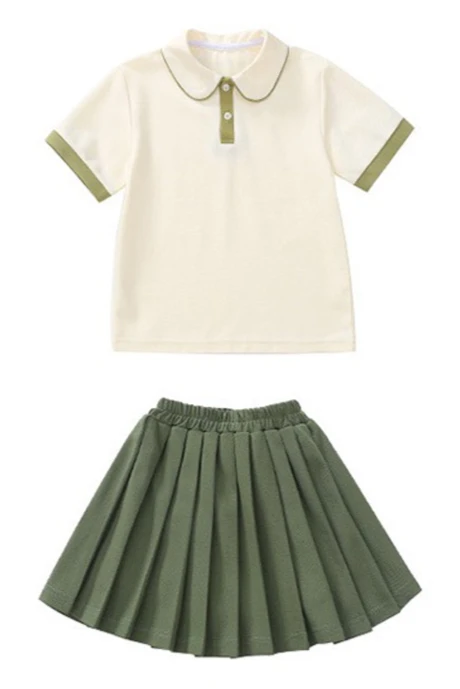
A cream polo with green trim and a green pleated skirt.

Materials, efficient cutting and packaging

How often students wear a shirt or ceremonial blazer helps us choose the fabric.
Fabric selection

Selected styles can use organic cotton or recycled polyester when available.

Cutting and inspection

We fit pattern pieces closely together and check early seams to limit offcuts and rework.

Packaging

Shop stock and class handouts may need different amounts of wrapping per garment.

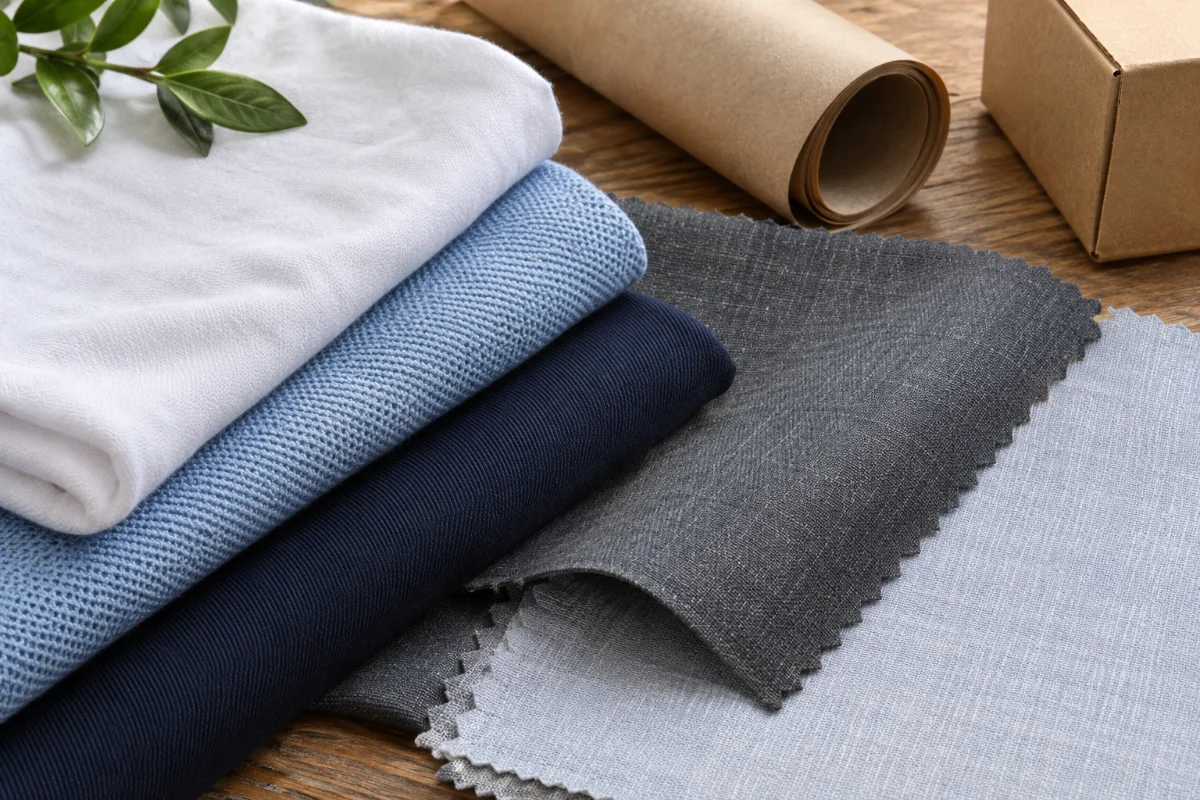
Schoolwear fabric swatches beside kraft paper and a cardboard box.

Fabric Options for Schoolwear

We check fabric availability and fiber details before sampling.

  • Cotton and recycled polyester
    Suppliers may offer organic cotton for clothing and recycled polyester for selected garments or bags.
  • Checking fiber content
    We can request records of the cloth’s fiber composition or recycled content.
  • Color, quantity and availability
    Color, weight and supplier minimums affect which cloth is available and when.

Cutting and Waste Handling

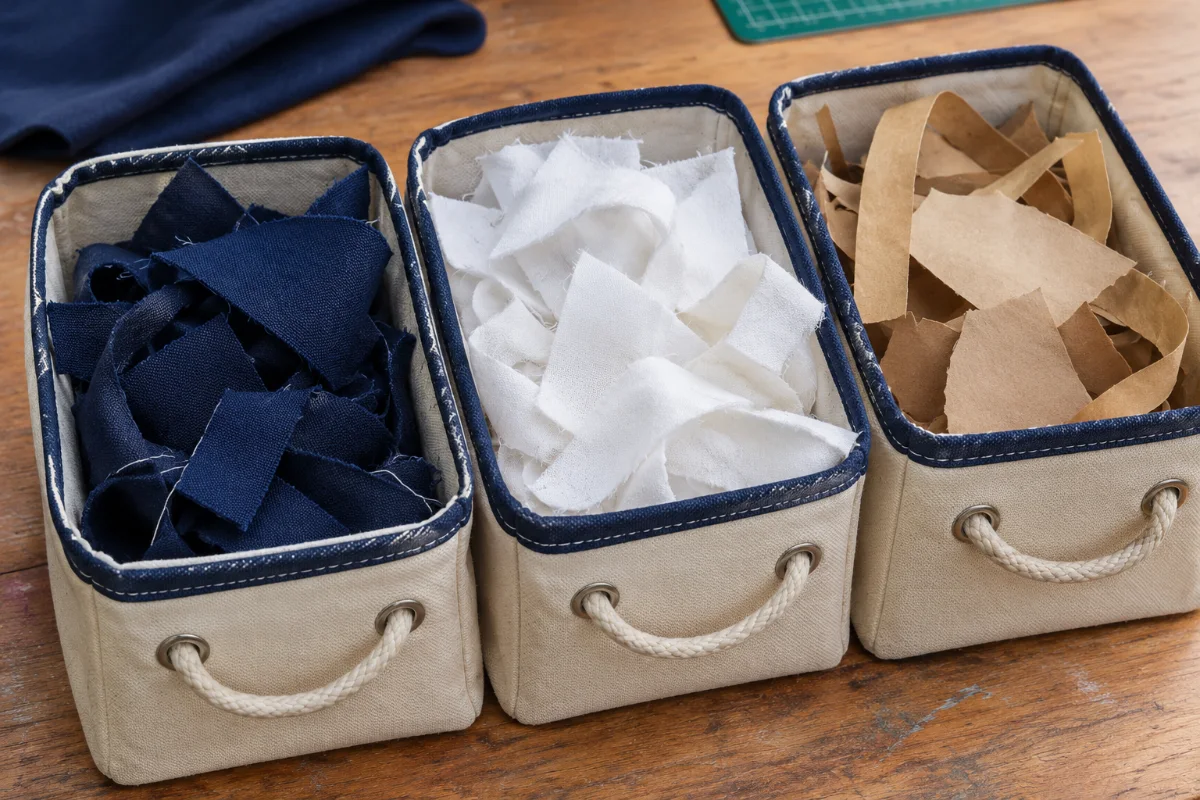
Closely spaced patterns limit offcuts. Cutters sort the rest by material.
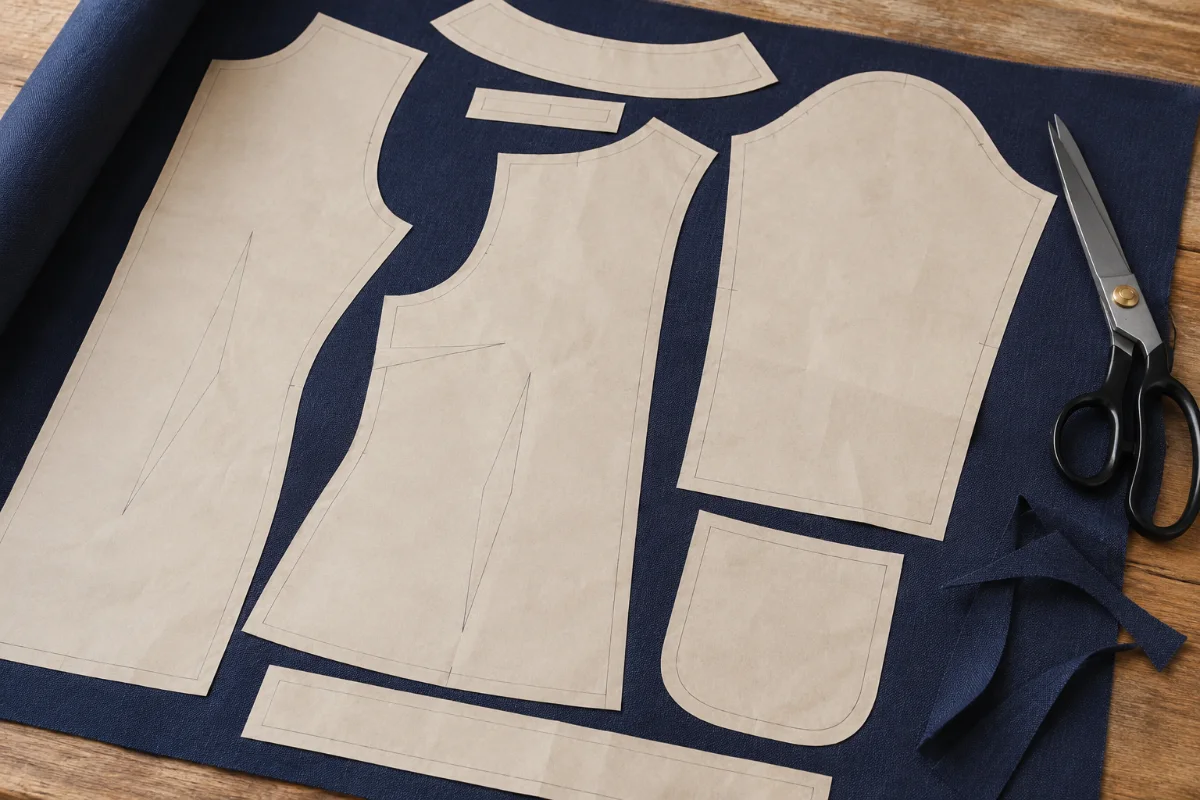
Shirt pattern pieces arranged close together on navy fabric.

Planning the Cut

The size breakdown sets how many pieces we cut.
  • Cutters group pieces by size and quantity.
  • They lay the shapes close together on the cloth.
  • Inspectors check the first cut and sewn pieces before work continues.
Navy fabric, white fabric and brown paper sorted into separate bins.

Sorting Materials

We keep textile offcuts separate from packing waste.
  • We sort cloth, yarn and plastic separately.
  • We set recyclable materials aside for collection.
  • We dispose of other waste under local requirements.
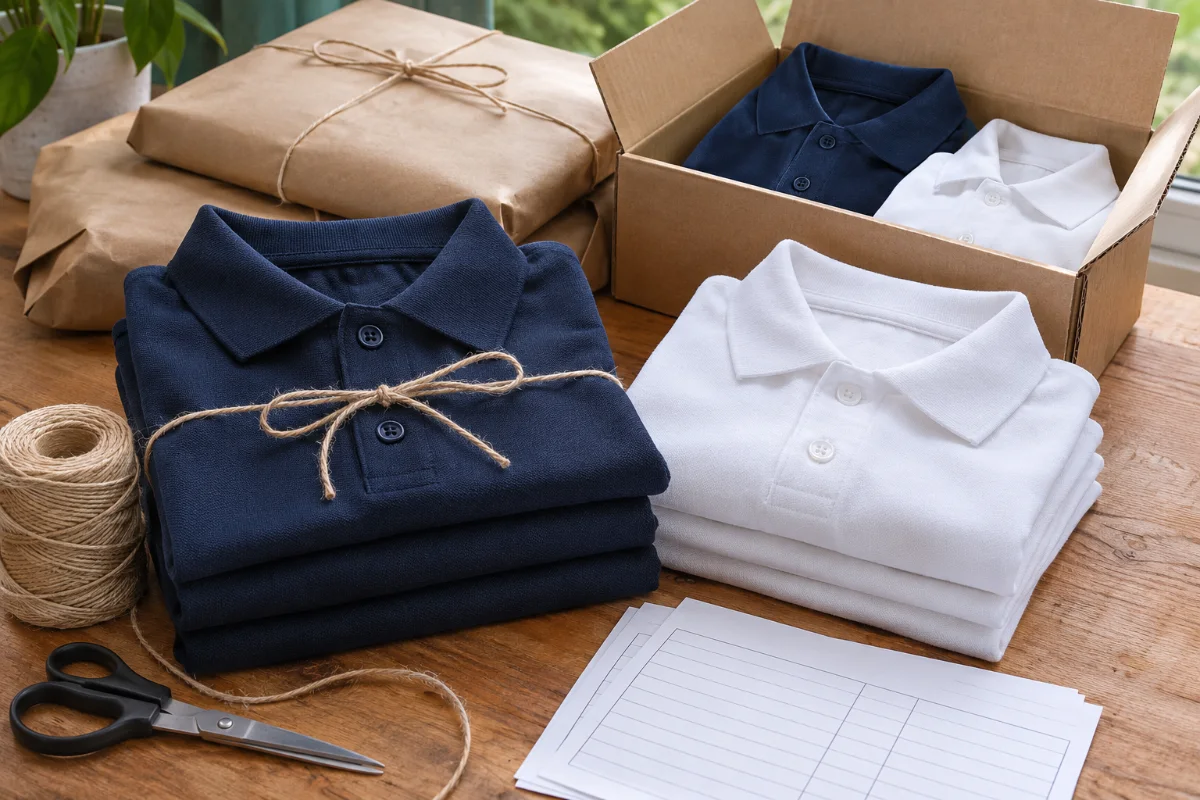
Folded uniforms, kraft paper parcels and an open shipping box.

Material records and packaging options

Supplier records name the fabric or packaging they cover.

  • Material identification
    We identify which outer cloth, lining or bag fabric a claim covers.
  • What a certificate covers
    We check the holder, material and validity dates on available supplier documents.
  • Packing alternatives
    Kraft paper and recyclable cartons are options if they protect garments and keep sizes identifiable.

Packaging for school distribution

We can discuss packaging that suits the school’s purchasing policy and handout plans.

Discuss Your Requirements

Questions About Materials and Waste

Availability and documentation depend on the fabric and the order.

Some garments can use organic cotton or recycled polyester. Recycled polyester may also suit bags, depending on weight, color and supply.
We check which records the supplier has for that fabric and what they cover.
We separate cloth, yarn and plastic and set recyclable material aside for collection.
Yes, if garments stay protected and sizes remain clear. We can assess kraft paper or recyclable cartons for the order.
Yes. Availability, supplier minimums and special packaging can change price, quantity and lead time.
WhatsApp Chat with us